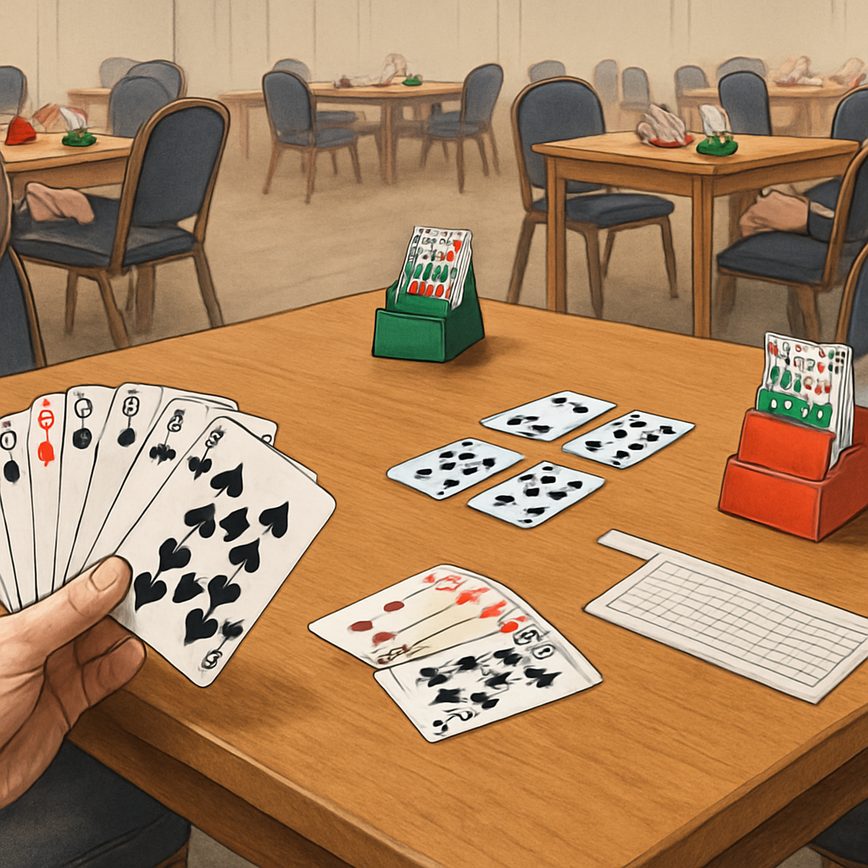
Introduction to Bridge Tournaments
Bridge tournaments are organized events where players compete in the strategic card game of bridge, testing their skills against others in a formal setting. These tournaments can vary in size from small local competitions to large international events, attracting both amateur enthusiasts and seasoned experts. The primary purpose of bridge tournaments is to provide a structured environment where players can challenge themselves, socialize, and enjoy the mental stimulation that comes from competitive play.
Bridge competitions offer a unique blend of camaraderie and rivalry, making them deeply appealing to the card game community. Unlike casual games, tournaments require participants to play multiple sessions under standardized rules and scoring systems, often over one or more days. This format not only promotes fairness but also allows players to showcase their strategic prowess and problem-solving abilities in a concentrated form.
For many, the appeal of bridge tournaments lies in the opportunity to meet like-minded individuals who share a passion for the game. These events serve as social hubs where players exchange strategies, learn new techniques, and build lasting friendships. Moreover, bridge tournaments can be highly rewarding, offering prizes, rankings, and titles that recognize the highest levels of skill and achievement within the global bridge community.
Overall, bridge tournaments provide a comprehensive tournament overview that highlights the competitive spirit, intellectual challenge, and social enjoyment of the game. Whether you are a beginner eager to experience organized play or a veteran seeking to test your abilities against top players, bridge competitions offer a rich and engaging environment to deepen your appreciation of this timeless card game.
What Are Bridge Tournaments?
Bridge tournaments are organized competitive events where players gather to compete in the game of bridge under standardized rules and settings. Unlike casual bridge games played socially among friends or family, bridge tournaments provide a structured framework to test players’ skills against a wider pool of opponents. The format of these bridge events typically involves multiple rounds or sessions, where participants accumulate scores or points based on their performance in each deal or match.
In a bridge tournament, the play is usually governed by a set of prearranged deals, and each hand is played by several pairs to ensure fairness and comparability in scoring. These events can range from small local gatherings to large international competitions, attracting players of all skill levels who are passionate about competitive bridge. The atmosphere is often more formal and competitive compared to casual play, emphasizing strategic thinking, partnership communication, and precise bidding and play techniques.
The bridge tournament definition emphasizes not only the structured nature of the event but also the spirit of competition and skill development that it fosters. Participants often prepare extensively and follow official rules and etiquette set by governing bodies such as the World Bridge Federation (WBF). Overall, bridge tournaments offer an exciting opportunity for players to engage deeply with the game and measure their abilities in a competitive environment.
History and Popularity
The history of bridge tournaments dates back to the early 20th century when contract bridge emerged as a popular card game. From informal gatherings to organized competitions, the evolution of bridge tournaments reflects the growing enthusiasm for the game worldwide. The structured format of these tournaments helped standardize the rules and fostered a competitive spirit among players. As bridges gained traction, various clubs and associations began hosting local, national, and international tournaments, marking significant milestones in card game tournament history.
The rise in bridge popularity can be attributed to its intellectual challenge and social appeal. With the establishment of governing bodies such as the World Bridge Federation, bridge tournaments transformed into prestigious events attracting players from diverse backgrounds. This global expansion not only highlighted the strategic depth of the game but also promoted cultural exchange and friendship among participants. Today, bridge tournaments are celebrated events held all over the world, showcasing the rich legacy and enduring appeal of the game.
Over the decades, card game tournament history has recorded numerous iconic championships that have shaped the modern competitive landscape of bridge. The increasing accessibility and media coverage of these events continue to fuel interest, securing bridge’s position as one of the most respected and widely played card games internationally. The blend of tradition and innovation in bridge tournaments ensures that the game remains vibrant and popular among new generations of players.
Types of Bridge Tournaments
Bridge tournaments come in various tournament types, each offering a unique style of play and competition. Understanding these formats is essential for players who want to participate and excel in bridge events. The three primary tournament types are pairs tournaments, team tournaments, and knockout bridge tournaments.
Pairs tournaments are the most common and straightforward bridge tournament format. In these events, players compete as pairs, with each pair’s goal being to achieve the highest score relative to other pairs playing the same hands. The competition is based on the cumulative points earned across many deals, and pairs are ranked according to their performance compared to all other pairs in the field. This format encourages individual skill and partnership understanding, as every deal counts towards the overall score. Pairs tournaments can be played both socially and competitively, making them accessible to players of all skill levels.
Team tournaments, on the other hand, involve groups of four or more players forming teams that compete against each other. The most common team format is the “duplicate team” event, where two pairs from each team play against two pairs from an opposing team on the same set of boards. Scoring is typically done using International Match Points (IMPs), where each result is compared to the opposing team’s result on the same hands, and the difference is converted to IMPs. This tournament type requires strategic collaboration and coordination among team members, as well as strong communication skills.
Knockout bridge tournaments are an exciting and highly competitive format where teams face off in direct head-to-head matches. Losers are eliminated from the competition in each round, while winners progress to the next stage until only one team remains. Knockout bridge tournaments test endurance, skill, and mental toughness due to their elimination nature. Matches can vary in length but often consist of multiple sessions to allow a thorough contest between the teams.
Each tournament type offers a different atmosphere and challenge. While pairs tournaments highlight individual partnerships, team tournaments emphasize collaborative strategy, and knockout bridge brings added pressure and intensity. Players often participate in various tournament types to diversify their experience and sharpen their skills across all aspects of the game.
Pairs Tournaments
Pairs tournaments are a popular format in the bridge community, focusing on the synergy between two partners rather than teams. In pairs bridge, competitors play with the same partner throughout the event, aiming to achieve the highest combined score possible.
The format of a bridge pairs competition typically involves multiple rounds where pairs compete against different opponents. Each round consists of a set number of deals (hands), which are pre-dealt and identical for all participants to ensure fair comparison. This format allows players to be directly compared based on their performance on the same deals.
Rules for pairs tournaments emphasize consistent cooperation and communication between partners within the laws of bridge. Players must adhere to standard bridge bidding and play procedures, and any irregularities are resolved according to official bridge regulations. It is crucial to maintain ethical play and accurate scoring to uphold the integrity of the competition.
Scoring in bridge pairs tournaments uses the matchpoint system, where pairs earn points based on how their results compare to all other pairs who played the same hands. Each result is converted into matchpoints, with higher matchpoints awarded to better performances. The pair accumulating the most matchpoints across all rounds wins. This method provides a precise measure of how well a pair performs relative to the entire field, rewarding both strategic play and careful bidding.
Team Tournaments
Team tournaments in bridge are a dynamic and strategic form of competition that involves groups of players, known as bridge teams, working together to achieve a common goal. Typically, a team consists of four to six players, divided into pairs. Each pair takes a seat at separate tables, where they compete against pairs from the opposing team.
The match format usually follows a series of head-to-head contests between pairs from the two teams. These matches are often played in a series of boards, which are individual deals of cards. Each board is played multiple times across different tables, with teams aiming to outscore their opponents on the same hands. This format enhances fairness by mitigating the luck factor inherent in any single deal.
Scoring in team competition bridge is primarily done using either International Match Points (IMPs) or Victory Points (VPs). IMPs compare the results obtained by the two teams on each board, converting score differences into standardized points. The total IMP score determines the winning team. In longer events, Victory Points may be used to rank teams across multiple matches by rewarding consistent performance.
Overall, team tournaments highlight the importance of cooperation, strategy, and communication within bridge teams, making team competition bridge both challenging and exciting for participants at all levels.
Knockout Tournaments
Knockout bridge, also known as elimination bridge, is a popular bridge tournament format where players or teams compete head-to-head in a series of rounds. In this format, each match is a direct elimination, meaning the losing player or team is immediately knocked out of the tournament, while the winner progresses to the next round. This continues until only one player or team remains, winning the entire competition.
The knockout format is thrilling due to its high stakes—every game counts, and a single loss means elimination. Typically, the tournament starts with a set number of players or teams paired off in the first round. Each match usually consists of multiple boards played to determine the overall winner, minimizing the impact of luck and emphasizing skill. As rounds progress, the field narrows down dramatically, intensifying the competition.
Because knockout bridge pits competitors directly against each other, strategy becomes crucial. Teams must balance aggressive and cautious play to avoid elimination. The simplicity and clarity of this bridge tournament format make it attractive for organizers and players alike, offering a straightforward path from initial matches to crown the champion.
How to Participate and Succeed in Bridge Tournaments
Participating in bridge tournaments is an exciting way to test and improve your skills while engaging with a community of passionate players. To get started, find tournaments that match your level and interests, which can be done through local clubs, online platforms, or national bridge organizations. Registering early is advisable to secure your spot, as popular tournaments often fill up quickly. Once you’ve signed up, familiarize yourself with the specific rules and format of the tournament, as these can vary.
When you enter a tournament, it’s important to adopt bridge tournament tips that enhance your experience and performance. Consistent practice is crucial; participate in practice games to sharpen your bidding and playing skills. Equally important is working on communication and partnership understanding, as bridge is a team game that relies heavily on well-coordinated strategies between partners. Effective communication without violating the rules can significantly boost your chances of success.
To improve your chances of winning, incorporate winning bridge strategies into your gameplay. Focus on card counting and inference, skills that allow you to anticipate opponents’ moves and plan your strategy accordingly. Analyze the bidding patterns carefully to gain insights into opponents’ hands and adjust your tactics on the fly. Additionally, maintain a calm and focused mindset, as mental endurance and concentration often separate winners from the rest. Avoid distractions and stay adaptable throughout the tournament.
Another key tip is to review your games after the tournament. Analyze hands you played, especially the ones that resulted in lost points. Learning from mistakes and understanding alternative plays will help you grow as a player. Taking part in post-game discussions or seeking advice from more experienced players can provide valuable insights and new strategies to incorporate.
Overall, to participate in bridge tournaments successfully, commit to continuous learning, strategizing, and collaboration with your partner. By following these bridge tournament tips and mastering winning bridge strategies, you can enhance both your enjoyment and performance in the competitive world of bridge.
Registering for a Tournament
Registering for a bridge tournament is a straightforward process that can be done either online or offline, making it accessible to all players regardless of their preference. To register bridge tournament participation, players usually start by finding an event they wish to join through club websites, bridge organizations, or tournament calendars.
The online option is often the most convenient. Many bridge tournaments provide dedicated registration portals where players can simply fill out their details, select the desired event, and pay entry fees electronically. This method is fast, efficient, and allows instant confirmation of spots in the tournament. Additionally, online platforms often provide reminders and updates about the tournament schedule and format.
For those who prefer traditional methods, joining bridge events often means registering in person at a local bridge club or contacting the tournament organizer directly via phone or email. Offline registration may require filling out a paper form and submitting payment in cash or by check. This method is especially common for smaller, community-based tournaments.
Regardless of the method, it is essential to complete the tournament entry process before the registration deadline to secure your spot. Paying attention to details such as partnership information and player rankings is also crucial during registration. By offering multiple registration options, bridge tournaments ensure that all players can easily join and enjoy the competitive and social experience of the game.
Essential Skills and Strategies
Success in bridge tournaments relies heavily on a combination of sharp skills and well-honed strategies. Players must develop a keen understanding of bridge strategies, which encompass planning the play of the hand from the moment the cards are dealt. This includes anticipating opponents’ moves and making calculated decisions to maximize the chances of winning tricks.
Card play techniques are fundamental components of effective gameplay. Mastery of techniques such as finessing, trump management, and signaling can significantly influence the outcome of a hand. These techniques require practice and experience to execute flawlessly during the fast pace of tournament play.
Another critical factor in tournament success is communication in bridge between partners. Since bridge is a partnership game, players must use the agreed-upon bidding system and signals to convey information about their hands. Clear and accurate communication allows partners to coordinate their strategies efficiently and avoid costly misunderstandings.
Players should also focus on maintaining concentration and managing time effectively throughout the tournament. Staying calm under pressure and continuously analyzing the evolving game state can yield better strategic choices. Regular practice, studying expert games, and reviewing one’s own play will enhance all these essential skills and strategies, ultimately improving tournament performance.
Etiquette and Rules to Follow
Proper bridge etiquette is essential to maintain a respectful and enjoyable environment during tournaments. Participants should always be courteous to fellow players, opponents, and tournament officials. Maintaining silence during the bidding and play is crucial to avoid distracting others, and electronic devices must be switched off or silenced to prevent disruptions. It is also important to avoid any behavior that could be interpreted as providing unauthorized information or signaling to partners, as this violates bridge conduct standards.
Tournament rules are designed to ensure fair play and a level playing field for all competitors. Players must adhere strictly to the established guidelines regarding bidding, card play, and scoring. Any form of cheating or unethical behavior is strictly prohibited and can lead to disqualification. Additionally, players should familiarize themselves with procedures for handling irregularities, such as revoked cards or hesitation during the bidding. Reporting any suspected breaches of rules to the tournament director is both a responsibility and a necessary action to preserve tournament integrity.
Understanding and following bridge etiquette and tournament rules not only promotes fairness but also enhances everyone’s enjoyment of the game. Respectful conduct fosters a positive atmosphere that encourages sportsmanship and camaraderie among participants. By observing proper bridge conduct and abiding by tournament rules, players contribute to a successful and smoothly run event where skill and strategy are rightly rewarded.

I’ve been playing bridge and other card games since my grandparents taught me the basics at age eight. I love exploring strategy, history, and the community behind each game, and I enjoy sharing tips and stories with fellow enthusiasts.