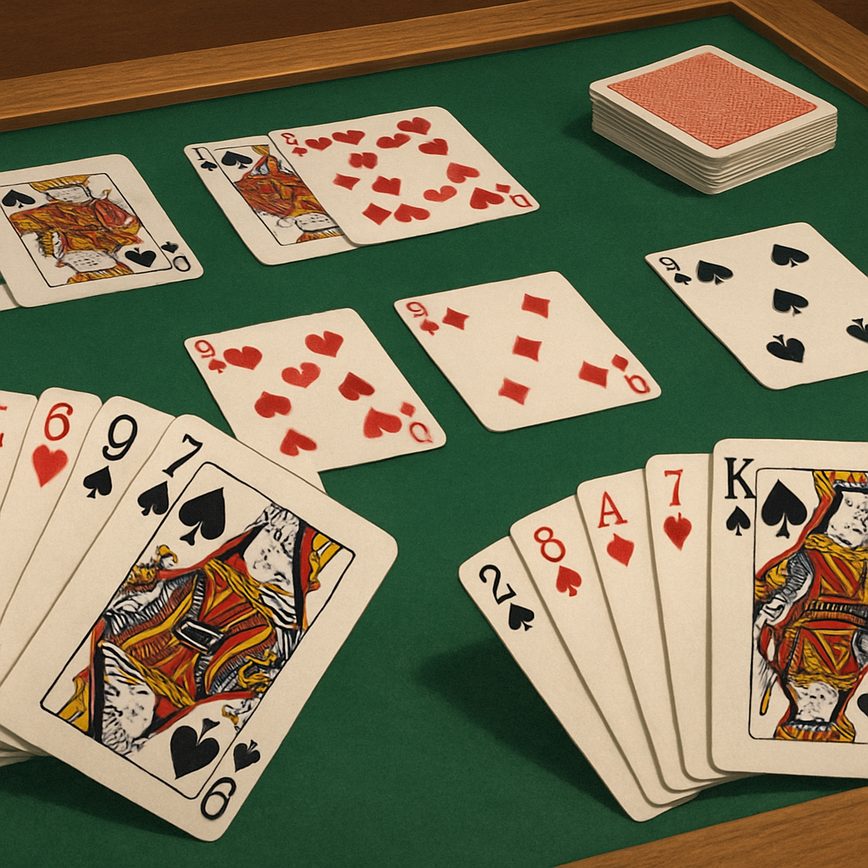
Introduction to IMPs Scoring in Bridge
IMPs scoring, short for International Match Points, is a widely used bridge scoring system designed to measure the difference between the result achieved by a pair or team and a common benchmark or average score. Unlike other scoring methods that focus on raw points or frequency of wins, IMPs emphasize the magnitude of each difference, making it distinct and strategic in the bridge game basics.
The primary purpose of IMPs scoring in bridge is to create a fair and balanced way to compare results across different tables or matches. It is commonly used in team events and international competitions where pairs compete against each other playing the same hands. By converting point differences into IMPs according to a standardized scale, players can see how big or small each gain or loss is, which helps in determining the overall winner more accurately.
One of the key features that sets IMPs scoring apart from matchpoint scoring and other systems is how the scoring deals with differences in points. In matchpoint scoring, used often in pairs games, each board is scored by comparing every pair’s result on the same hand, and each pair gets matchpoints based on whether their score was higher or lower than others. A small difference, such as winning by a single trick or a slight overtrick, can have a big impact in matchpoint scoring since it counts as a win or loss against many other pairs.
In contrast, IMPs scoring converts point differences into a fixed scale that reduces the impact of small variations and emphasizes larger swings in results. For example, a difference of 10 points might count as zero IMPs, while a difference of 100 points would result in an IMP difference of 2 or 3. This system rewards significant achievements and big swings in contract results, which makes it particularly suitable for team matches where strategy and safety play a crucial role. Players are encouraged to bid and play conservatively to avoid large negative swings.
Overall, IMPs scoring offers a unique approach to evaluating bridge hands that balances risk and reward differently from matchpoint scoring. Understanding IMPs scoring is essential for players who want to excel in team events and grasp the nuances of competitive bridge beyond the basic bridge scoring system found in casual play.
What Are IMPs?
IMPs, or International Match Points, are a specialized scoring method used primarily in the game of bridge, particularly in team competitions. The IMPs meaning revolves around quantifying the difference in points scored by competing teams on each board, and then converting these differences into a standardized scale. This system offers a fair and balanced way to evaluate performance by emphasizing not just the raw scores, but the relative success against the opposing team.
The IMPs definition is closely tied to the concept of bridge points, which represent the actual points scored on each deal. After both teams complete a board, the difference in their bridge points is calculated. This difference is then referenced against an IMPs scale table that assigns a corresponding IMP score. For example, a small point difference might translate to 1 or 2 IMPs, while a larger difference might yield tens of IMPs. This conversion balances the scoring by reducing the impact of very large swings and rewards consistent performance across multiple boards.
In bridge competitions, IMPs play a crucial role in delivering a competitive and strategic experience. They encourage players to bid and play optimally while being mindful of risk, as each board’s outcome can significantly affect the team’s overall IMP score. This scoring method facilitates easier comparison between teams over many deals, making it well suited for tournaments and match play. Ultimately, understanding IMPs and their application enhances both the strategic depth and enjoyment of the game.
Differences Between IMPs and Other Scoring Methods
IMPs scoring stands apart from other bridge scoring methods such as matchpoints and rubber bridge by focusing on the magnitude of point differences rather than just the frequency of wins. Unlike matchpoint scoring, where each board is scored relative to other pairs and the main goal is to outperform the majority by even a small margin, IMPs emphasize the size of the swing in points, converting raw score differences into international match points. This means that large gains or losses on a board have a greater impact on the final result.
In matchpoints, every trick counts almost equally, encouraging players to aim for overtricks and fine margins. Rubber bridge, on the other hand, combines the scoring of several deals until a rubber is completed, using points to track progress without converting to international match points. IMPs scoring offers a balanced approach where strategic bidding and good play to maximize the score on each hand are rewarded, without disproportionately valuing minor overtricks.
The advantages of IMPs over other bridge scoring methods lie in its ability to reduce the luck factor inherent in matchpoints by focusing on substantial gains and losses, making it the preferred method for team competitions. Furthermore, IMPs scoring fosters more realistic and practical bidding and play strategy, as players must concentrate on making contracts and avoiding significant penalties rather than chasing small point differences.
How to Calculate IMPs in Bridge
Calculating IMPs in bridge involves converting raw score differences between two teams into a standardized scoring metric known as International Match Points (IMPs). This method helps compare the performance of teams on an equitable scale regardless of the scoring magnitude. Follow these step-by-step instructions for accurate IMPs calculation using a scoring table.
-
Step 1: Record the Raw Scores
Begin by noting the raw scores obtained by each team for a particular hand or set of hands. Raw scores reflect the actual points won or lost during gameplay and are the starting point for IMPs calculation.
-
Step 2: Calculate the Score Difference
Subtract the lower raw score from the higher raw score to determine the score difference. This difference represents how much one team outscored the other and is essential for the IMPs conversion process.
-
Step 3: Refer to the IMPs Scoring Table
Use a standard IMPs scoring table to convert the raw score difference into IMPs. The table correlates ranges of score differences to specific IMP values, providing a consistent method to measure performance differences.
-
Step 4: Match Difference to IMP Value
Locate the score difference on the left column of the IMPs scoring table and find the corresponding IMP value in the adjacent column. Each score difference range has a defined IMP score, ensuring accuracy and consistency in bridge scoring calculation.
-
Step 5: Assign IMPs to Teams
The team with the higher raw score receives the IMPs value obtained from the scoring table. Conversely, the team with the lower score gets the negative equivalent. This step completes the conversion of raw results into IMPs, enabling easier comparison across multiple hands or matches.
By following these steps carefully, you can efficiently perform IMPs calculation in bridge, facilitating clear and fair score difference conversion that reflects teams’ relative performances accurately. Utilizing the scoring table guarantees uniformity in scoring across different games and tournaments.
Using the IMPs Table
The IMPs table is an essential tool in bridge scoring that helps you convert the score difference between two teams into International Match Points (IMPs). By using the official IMPs table, you can easily determine how many IMPs each score difference is worth, which is crucial for fair and standardized scoring in matchpoint and team events.
To use the IMPs scoring chart, first calculate the absolute difference between the two scores you are comparing. Then, refer to the IMPs table to find the corresponding IMP value. This value reflects how significant the score difference is in terms of match points.
For example, if the difference in scores is 20 points, the IMPs table shows this corresponds to 0 IMPs, meaning the difference is negligible. However, a difference of 500 points converts to 7 IMPs, which is a substantial impact on the match result.
Here’s a simple example using the IMPs table:
| Score Difference | IMPs |
|---|---|
| 20 | 0 |
| 150 | 2 |
| 500 | 7 |
| 1000 | 10 |
| 2000 | 13 |
Using this bridge scoring guide, players and tournament directors can quickly convert raw point differences into the standardized IMPs format, ensuring consistency and fairness across all levels of play.
Practical Examples of IMPs Scoring
Understanding IMPs examples through bridge scoring practice is essential for mastering the game. Below, we present detailed example hands and walk you through the step-by-step IMPs calculation examples in common bridge scoring scenarios.
- Example Hand: Your side bids and makes 4♥, scoring 620 points. The opposing pair bids and makes 3NT, scoring 400 points.
- Step 1: Calculate the point difference: 620 – 400 = 220 points in favor of your side.
- Step 2: Use the IMPs scale to convert the raw point difference to IMPs. A 220-point difference translates to 5 IMPs.
- Step 3: Record the 5 IMPs gained by your side for bridge scoring practice.
- Another Scenario: Your side bids 3♠ but goes down two tricks undoubled, losing 100 points, while opponents score 170 for a partial contract.
- Step 4: Calculate the difference: -100 – 170 = -270 points. This negative value indicates your side’s loss.
- Step 5: Convert 270 points to IMPs using the IMPs calculation examples: 270 equals a loss of 6 IMPs.
- Step 6: In your bridge scoring scenarios, record this as -6 IMPs against your side.
By practicing these IMPs examples and following the step-by-step approach, you can refine your skills and accurately assess performance in competitive bridge matches.
Strategies and Tips for Playing IMPs Scoring Bridge
When competing in IMPs scoring bridge, adopting the right strategies is crucial to maximizing your game performance. Unlike matchpoint scoring, IMPs bridge focuses on minimizing large losses and capitalizing on substantial gains, which demands a different approach to how you play each hand.
One key IMPs bridge strategy is to prioritize contracts that can yield safe but meaningful points. Playing consistently safe contracts rather than pushing for marginal overtricks can prevent big swings against you. This focus on risk management means it’s often better to secure a positive score than to gamble on a high-risk contract that could lead to a large penalty.
Another important tip is to carefully consider your playing tactics when defending. Since IMPs scoring heavily penalizes large defeats, aggressive defense that aims to set the opponents by a considerable margin can swing the overall match in your favor. Conversely, avoid taking unnecessary risks that might allow the opponents to escape with easy contracts.
Effective communication with your partner is also vital in IMPs bridge strategy. Accurate bidding exchanges reduce the chances of misunderstandings and wrong contracts that can cost significant IMPs. Use well-practiced bidding conventions and signals to reinforce your partnership’s clarity and precision.
In addition, pay close attention to the scoring implications of each hand throughout the match. Not all scoring opportunities in IMPs hold equal weight; a small gain could be enough to maintain a lead, while sometimes a bold move is needed to bridge a scoring gap. Adapt your playing tactics accordingly to the current state of the match and always weigh the risk versus reward.
Finally, practice patience and remain focused. IMPs matches often turn on a few critical deals, so maintaining composure and sticking to your sound IMPs bridge strategy throughout the session will maximize your chances of success. By blending prudent contract choices, strategic defense, clear communication, and match awareness, you can significantly improve your IMPs scoring bridge results.
Aggressive vs Conservative Play
When playing bridge under the IMPs scoring system, understanding the balance between aggressive and conservative play is crucial. IMPs strategy rewards making contracts and penalizes large losses more heavily compared to matchpoints, so the playing style you adopt can significantly impact scoring outcomes. Aggressive play involves taking calculated risks to bid game or slam contracts that offer higher rewards if made successfully. This approach is often justified when holding strong hands or favorable positions, where the potential gain outweighs the risk of going down.
Conversely, conservative play emphasizes caution, aiming to secure safer contracts and avoid substantial penalties from failed bids. This style is ideal when your hand is marginal or the risk of failure is high, as losing fewer IMPs can be more beneficial in the long run than attempting overambitious contracts. Effective risk management is a cornerstone of IMPs strategy, as avoiding large swings often leads to better cumulative results in team events and tournaments.
Choosing when to shift between aggressive and conservative approaches depends on factors such as the vulnerability, position, and match context. Skilled players recognize when it is advantageous to push for higher scores with aggressive bridge tactics and when to prioritize safety with conservative play. Overall, integrating a dynamic playing style tailored to the situation helps maximize scoring potential and minimizes losses under the IMPs scoring system.
Common Mistakes to Avoid in IMPs Scoring
When playing bridge with IMPs scoring, many players fall into frequent bridge mistakes that can negatively impact their results. One common IMPs error is the misjudgment of risk and reward. Unlike matchpoint scoring, IMPs emphasize avoiding large losses rather than chasing small gains, so players must be careful not to overbid or take unnecessary risks that can lead to big penalties.
Another frequent mistake is ignoring the importance of accurate scoring calculation. Scoring pitfalls often arise from misunderstanding how IMPs convert point differences into scores, causing players to misinterpret their position in the game. Taking time to verify scores and understand the conversion table can prevent such errors and improve strategic decisions.
Additionally, some players fail to adjust their play style when switching between different scoring formats. Bridge playing tips suggest tailoring your approach specifically for IMPs scoring by focusing on solid contracts and safety plays rather than risky attempts to maximize overtricks.
To avoid these common IMPs errors, it’s crucial to consistently review the scoring rules and practice disciplined bidding strategies. Developing a clear understanding of IMPs scoring, combined with careful play, will reduce costly mistakes and lead to better competitive results in your bridge games.

I’ve been playing bridge and other card games since my grandparents taught me the basics at age eight. I love exploring strategy, history, and the community behind each game, and I enjoy sharing tips and stories with fellow enthusiasts.